Built For The POTS Protocol

A Real Sodium Dose for POTS
700 mg sodium · sodium citrate

A Real Sodium Dose for POTS
700 mg sodium · sodium citrate
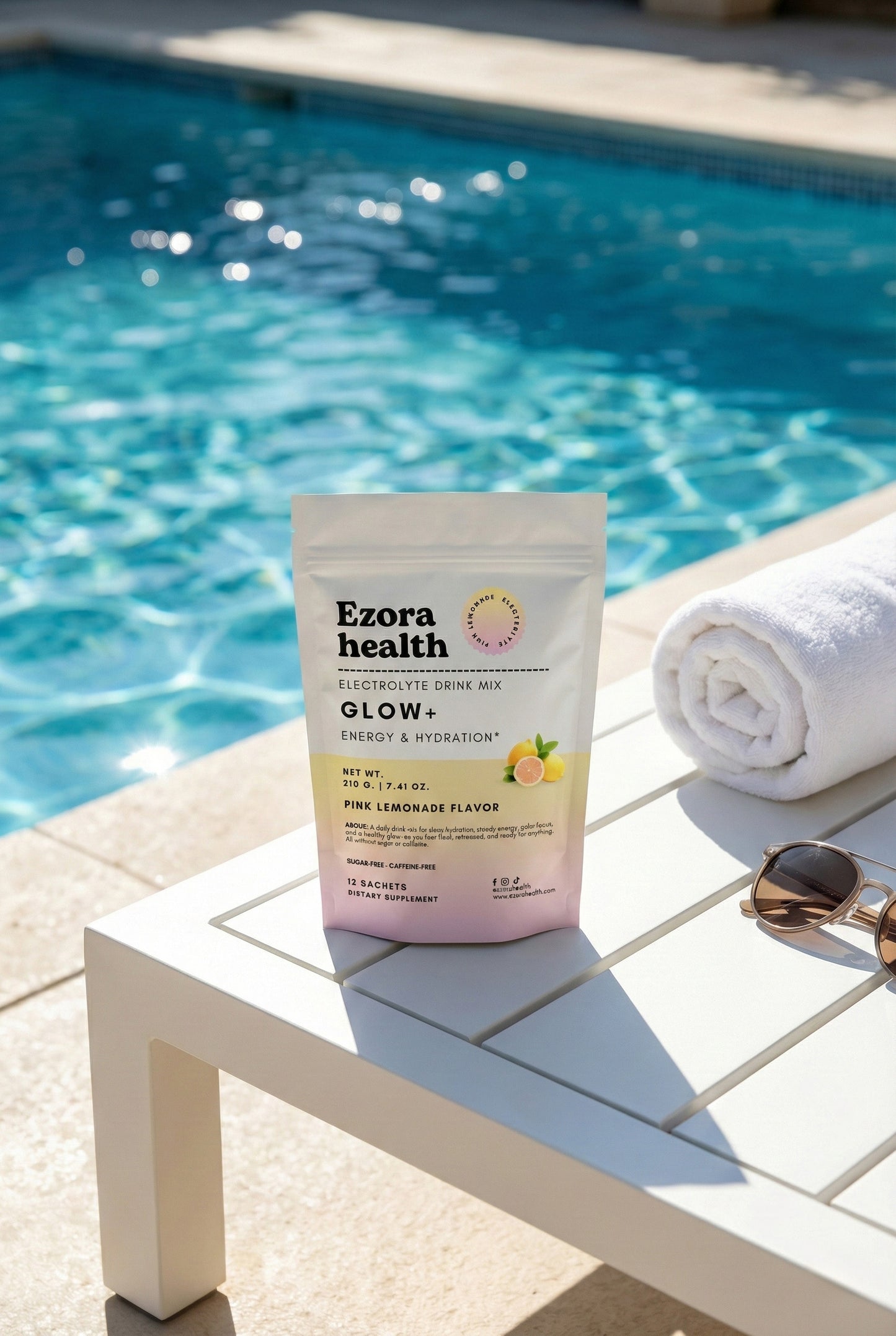
GLOW+ delivers 700 mg of sodium per stick. POTS protocols often recommend 3–10 g of sodium daily to support blood volume. Gatorade has 270 mg. Liquid IV has 510 mg. GLOW+ gets you there faster — with sodium citrate for easier absorption and less bloat.
2.6× the sodium of Gatorade. 37% more than Liquid IV.

Tastes Like Real Lemonade
Pink lemonade · sip-all-day

Tastes Like Real Lemonade
Pink lemonade · sip-all-day
LMNT has the sodium, but many people can't drink it all day. GLOW+ was made for daily use: bright, crisp, and light enough to sip from morning to night.
The drink you reach for — not the one you force down.

Zero Sugar. Zero Caffeine. Zero Artificial Dyes.
20 cal · 0 sugar · 0 caffeine · 0 dyes

Zero Sugar. Zero Caffeine. Zero Artificial Dyes.
20 cal · 0 sugar · 0 caffeine · 0 dyes
Most hydration mixes rely on sugar, caffeine, or artificial dyes. GLOW+ skips all of it: 20 calories, zero sugar, zero caffeine, and no artificial colors.
No sugar. No stimulants. No crash.

Bioactive Vitamins + Nervous System Support
Methylcobalamin · P5P · Mag glycinate · L-theanine

Bioactive Vitamins + Nervous System Support
Methylcobalamin · P5P · Mag glycinate · L-theanine
GLOW+ uses methylcobalamin B12, P5P B6, and magnesium glycinate + taurate — forms chosen for better absorption and tolerability. Plus taurine and L-theanine for nervous system support.
Every ingredient has a purpose.

Built for the Hardest Moment of the Day
First-sip morning formulation

Built for the Hardest Moment of the Day
First-sip morning formulation
After eight hours without fluids or sodium, mornings can hit hard. GLOW+ was designed for that first sip: high sodium, fast absorption, no stimulants, and easy to drink before food.
Also your thirst-crush for hot days.

Designed With the Dysautonomia Community
Built with — not for — the POTS community

Designed With the Dysautonomia Community
Built with — not for — the POTS community
Most electrolyte brands were built for sports. GLOW+ was built around what the dysautonomia community actually asked for: high sodium, no stimulants, bioactive vitamins, skin hydration support, and a formula made for daily life.
Built for women. Built for everyday use. Built to actually keep drinking.
FROM THE COMMUNITY
Real POTS patients.
Customer stories shared in the dysautonomia community.
![TO REPLACE: Dr. [Cardiologist Name]](http://ezorahealth.com/cdn/shop/files/ezora-pots-supplement-facts.jpg?v=1779371190&width=1200)



HEAD-TO-HEAD
GLOW+ vs Others — what POTS protocols actually need

|

|
|
|---|---|---|
| Sodium | 700mg+ — because you finish the glass | 1,000mg on the label · closer to 300mg if you can't finish your glass |
| What you're drinking | Pink lemonade | Expensive salt water |
| The morning sip | Something you look forward to | Something you brace for |
| By day 3 | Already opening stick #10 | Box barely touched |
| Your nervous system | ✅ Calmed (L-theanine + taurine) | ✗ |
| Your skin | ✅ Plump (hyaluronic acid + B12) | ✗ |
| Your energy | ✅ Lifted (B12 + B6 + D) | ✗ |
| Built for | Living with POTS every day | Crossfit on Saturday |
| The verdict | A drink you crave | A chore you push through |
POTS Questions, Answered
The questions we get most from dysautonomia patients deciding if Glow+ fits their protocol.